Table of Contents
- Best Travel Size Skincare Essentials at a Glance
- Build Your Travel Skincare Routine Step by Step
- Carry-On Skincare Essentials: What You Can Actually Pack
- How to Pack Skincare for Travel Without Leaks
- Skincare Essentials by Skin Type and Concern
- Hydrating Sprays, Masks, and Extra Skincare Layers
- Adjust Your Travel Skincare for Climate and Trip Length
- Frequently Asked Questions
Last Updated: October 19, 2026
Best Travel Size Skincare Essentials at a Glance
Packing a skincare routine for travel doesn’t mean sacrificing your skin’s health or your luggage space. The challenge most travelers face is choosing which products actually matter when you’re limited to carry-on liquids and a compact toiletry bag.
Travel size skincare essentials are the foundation of any portable routine. The key is selecting products that address your core skin needs without excess weight or volume. Most travelers either overpack (filling their bag with redundant products) or underpack (skipping critical steps and facing skin issues mid-trip).
Here’s what makes the difference: a thoughtfully curated travel size skincare collection keeps your skin barrier intact, prevents breakouts from travel stress, and maintains your complexion across time zones and climate changes.
| Product Type | Purpose | Why It Matters |
|---|---|---|
| Cleanser | Remove impurities and makeup | Prevents clogged pores during travel |
| Serum | Targeted treatment | Addresses specific skin concerns efficiently |
| Moisturizer | Hydrate and protect | Combats dry cabin air and climate shifts |
| Sunscreen | UV protection | Essential daily defense, especially at new destinations |
| Toner or hydrating spray | Boost hydration | Refreshes skin between washings |
Build Your Travel Skincare Routine Step by Step
A complete travel skincare routine follows the same logic as your at-home regimen, cleanse, treat, moisturize, protect. The difference is scale. Travel forces you to prioritize, which often improves your routine by eliminating products you don’t actually need.
Start with your cleanser. This is non-negotiable. You need to remove daily grime, sunscreen, and makeup before bed, regardless of where you’re staying. A travel-size cleanser typically comes in 1-2 ounce bottles, which lasts 5-7 days depending on usage. The CeraVe Hydrating Facial Cleanser offers a gentle option that doesn’t strip skin, making it reliable across different climates.
The order matters: cleanse first, then apply targeted treatments, then moisturize, then protect with sunscreen. This sequence ensures each product penetrates and performs as intended. Skipping steps or reversing the order compromises effectiveness.
Cleansers and Face Washes
A travel cleanser should work in any water condition, hard water, soft water, different mineral content. Look for gentle formulations that don’t require extensive rinsing, since hotel water quality varies. Cream-based cleansers tend to travel better than foaming ones, which can separate in tight containers.
CeraVe Hydrating Facial Cleanser removes makeup and impurities without disrupting your skin barrier. The travel-size version fits easily in carry-on bags and lasts through most trips. Cetaphil Daily Facial Cleanser provides a comparable alternative if you prefer a slightly lighter texture.
The reality: most travelers overestimate how much cleanser they need. A travel-size bottle (typically 2-3 ounces) provides enough for a 7-10 day trip if you use a dime-sized amount twice daily. Bringing a full-size bottle is unnecessary weight.
Serums and Targeted Treatments
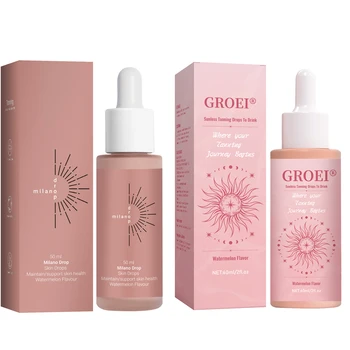
Serums concentrate active ingredients into small volumes, making them ideal for travel. A serum addresses specific concerns, hydration, brightening, or oil control, without taking up much space. One bottle typically lasts an entire trip or longer.
Summer Fridays Reset Daily Exfoliating Pads offer a pad-based treatment that’s easier to pack than liquid serums. The pad format eliminates spillage risk and simplifies application. For hydration-focused travel, a niacinamide serum works across most skin types and addresses travel-related dehydration.
Serums are concentrated, so a little goes a long way. A 0.5-ounce serum bottle can last 2-3 weeks of daily use. This makes them space-efficient and cost-effective for travel.
Moisturizers and Face Creams
Moisturizer becomes critical during travel. Airplane cabins, hotel heating systems, and new climates all dehydrate skin. A travel-size moisturizer (1-2 ounces) should be your non-negotiable inclusion.
Dieux Skin’s Mercy Recovery Cream addresses travel-stressed skin with a richer formula that works overnight. Apply it before bed to repair your skin barrier while you sleep. The recovery cream format acknowledges that travel disrupts your skin, so you need extra support.
Look for moisturizers that work in both dry and humid climates. A lightweight gel-cream adapts better across destinations than heavy creams that feel greasy in tropical humidity or insufficient in desert dryness.
Travel Size Sunscreen and SPF Protection
Sunscreen is non-negotiable for travel skincare essentials. UV exposure intensifies at higher altitudes and near water (the WHO). A travel-size sunscreen (1-2 ounces) should last 5-7 days with daily face application.
The challenge with travel sunscreen: most people don’t use enough. A proper face application requires about a quarter-teaspoon, which most travelers skimp on. A travel-size bottle forces you to acknowledge the volume needed, making underapplication less likely.
Choose a sunscreen that doesn’t leave a white cast if you’re traveling somewhere you’ll be photographed frequently. Mineral sunscreens offer excellent protection but can appear chalky. Chemical sunscreens absorb more seamlessly but require 15 minutes to activate before sun exposure.
Sunscreen expires. Check the manufacturing date on travel-size bottles before packing. A sunscreen past its expiration date loses effectiveness, leaving your skin unprotected despite application.
Carry-On Skincare Essentials: What You Can Actually Pack
TSA regulations limit liquid products to 3.4 ounces (100 milliliters) per container in a single quart-sized bag. This rule applies to anything with a pourable or spreadable consistency, cleansers, moisturizers, serums, sunscreen, and toners all count.
Solid or powder products don’t count toward liquid limits. This means sheet masks, exfoliating pads, and solid cleansing bars can exceed the standard size without issues. Many travelers miss this opportunity, packing liquids when solid alternatives exist.
The carry-on strategy: prioritize products that must be liquids (cleansers, serums, sunscreen), then fill remaining space with solid alternatives (masks, pads, balms). This maximizes your routine within TSA limits.
Decanting vs. Buying Pre-Sized Travel Products
You have two paths: buy pre-made travel-size products or decant full-size products into smaller containers. Each approach has trade-offs.
Pre-made travel products offer convenience and eliminate the decanting step. Brands like Drunk Elephant offer The Littles Kit, which bundles travel-size versions of their bestsellers. This removes guesswork about what to pack and ensures products are formulated to work together.
Decanting works better if you already have full-size products at home. A small glass or plastic container (1-2 ounces) holds enough product for a 7-10 day trip. Decanting saves money if you travel frequently, but requires advance preparation and introduces spillage risk if containers aren’t properly sealed.
The practical choice depends on your travel frequency. Occasional travelers benefit from pre-made kits. Frequent travelers save money by decanting from full-size bottles.
TSA Liquid Rules and Allowances
The 3-1-1 rule governs carry-on liquids: 3.4 ounces per container, 1 quart-sized bag total, 1 bag per passenger. Exceeding any limit means confiscation at security.
Solid products bypass these limits entirely. A solid moisturizer bar, solid cleanser, or powder mask face no size restrictions. If you’re traveling with tight luggage space, solid alternatives deserve consideration.
Gels and creams fall into a gray area. TSA agents use the “spreadable” test: if it spreads like peanut butter, it’s treated as a liquid.
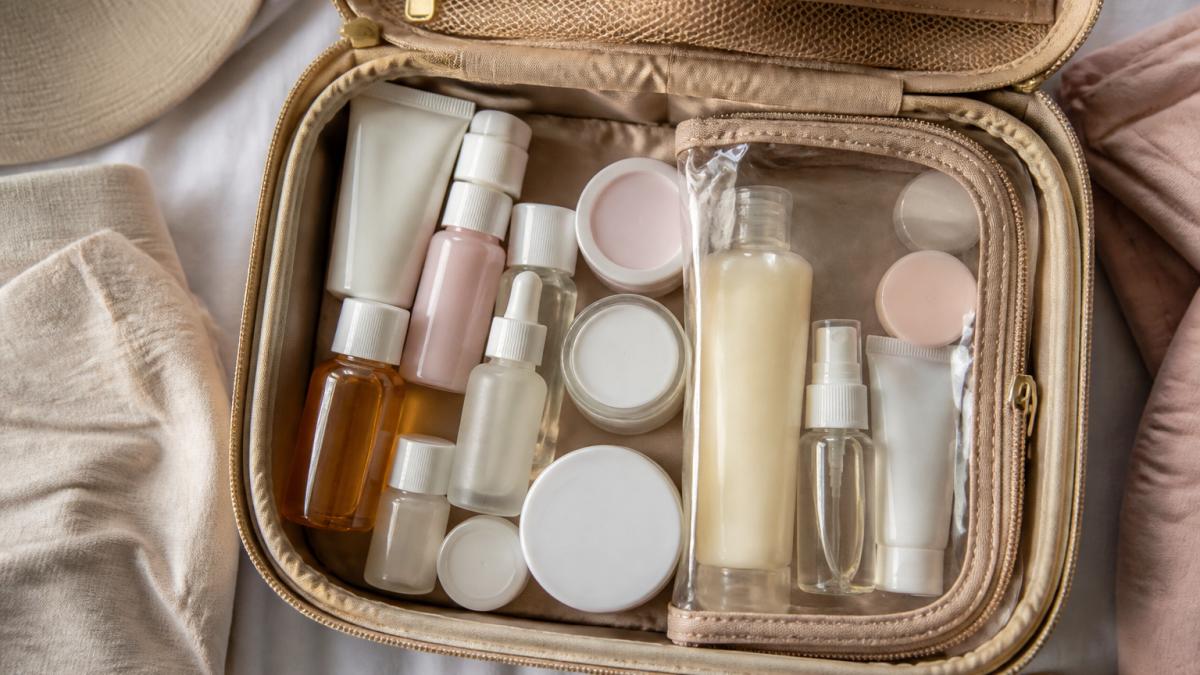
How to Pack Skincare for Travel Without Leaks
Leaking products ruin luggage and waste expensive skincare. Prevention requires proper container selection and packing technique.
Invest in leak-proof containers. Silicone travel bottles with screw caps and sealed lids outperform basic plastic bottles.
Double-bag liquid products. Place sealed bottles in a small ziplock bag, then place that inside your quart-sized TSA bag. This creates two barriers against leaks.
Pack bottles upright in your toiletry bag, never on their sides. Horizontal placement increases pressure on seals, raising leak risk. Upright positioning reduces pressure and keeps seals intact.
Avoid overfilling containers. Leave a quarter-inch of headspace in each bottle to allow for expansion during air pressure changes. A completely full bottle has nowhere for product to move, increasing rupture risk.
Skincare Essentials by Skin Type and Concern
Travel disrupts skin. Stress, dehydration, new water, and climate changes trigger reactions. Your travel routine should address your specific skin type while accounting for travel-induced stress.
Oily or acne-prone skin needs lightweight, non-comedogenic products. Skip heavy creams; opt for gel moisturizers and mattifying serums. Travel often exacerbates oiliness due to stress hormones and humidity changes.
Dry or sensitive skin requires richer formulations and barrier support. A recovery cream like Dieux Skin’s Mercy works overnight to repair travel damage.
Combination skin benefits from targeted treatment. Use a lightweight moisturizer on oily zones and a richer cream on dry areas. Travel often normalizes combination skin temporarily, so your routine can simplify.
Reactive skin demands minimal change. Stick to products you’ve tested at home. Travel introduces enough variables without adding new skincare.
Hydrating Sprays, Masks, and Extra Skincare Layers
Hydrating sprays refresh skin between cleansings and boost hydration mid-flight. A travel-size spray (1-2 ounces) fits easily in carry-on bags and provides instant refreshment during long flights or dry hotel environments.
Masks offer concentrated treatment in a compact format. Sheet masks pack flat and require no additional products, just apply, wait 15 minutes, and remove.
The Littles Kit from Drunk Elephant bundles multiple treatment options into one compact package, addressing hydration, exfoliation, and treatment in travel-appropriate sizes. This approach simplifies decision-making for travelers who prefer curated collections over individual product selection.
Think of hydrating sprays and masks as optional layers that enhance your routine without being essential. If luggage space is tight, skip them. If you have room, they provide valuable treatment options during stressful travel days.
Adjust Your Travel Skincare for Climate and Trip Length
Climate dramatically affects skincare needs. A trip to a humid tropical destination requires different products than a dry mountain retreat.
Humid climates (tropical destinations, coastal areas) increase oil production and create conditions for breakouts. Pack lightweight, non-comedogenic moisturizers and skip heavy creams.
Dry climates (deserts, high altitude, winter destinations) dehydrate skin rapidly. Pack richer moisturizers and add a hydrating serum for extra support.
Trip length determines product quantities. A 3-day trip requires minimal products; a 2-week journey needs larger quantities or decanted backups.
Short trips (3-5 days) work with minimal products: cleanser, moisturizer, sunscreen, and one treatment product.
The best travel size skincare essentials adapt to your destination’s climate and your trip’s duration. A routine that works for a week in humid Hawaii fails in a dry mountain cabin. Adjust accordingly.
Packing skincare for travel challenges even experienced travelers. At Beauty Fresh Essentials, we’ve curated a collection of travel-friendly skincare products that simplify this process.
Frequently Asked Questions
What skincare essentials should I pack for travel?
A minimal travel skincare routine includes a cleanser, moisturizer, sunscreen, and any targeted treatment for your specific skin concern. Start with these four, then add a hydrating spray or mask if you have extra space. Choose travel-size versions (under 100 ml) to meet carry-on liquid limits and keep your bag light. Prioritize products you use daily at home, don’t experiment with new brands on a trip.
How do I build a travel skincare routine that actually works?
A travel skincare routine follows the same steps as your home routine but in compact form: cleanse, treat (serum or targeted product), moisturize, and protect with sunscreen. If your skin is sensitive, stick to products you already know work for you. For longer trips (7+ days), consider adding a hydrating mask or exfoliating pads. Test your travel routine at home first to confirm all products work together without irritation.
What’s the best way to pack skincare for travel without leaks?
Use sealed, leak-proof containers and keep products upright in a dedicated toiletry bag. Decanting into smaller bottles works well if you seal them tightly. Place a small piece of plastic wrap under bottle caps for extra security. Store the toiletry bag in a waterproof pouch as backup. Avoid overfilling bottles and choose solid or powder formats (masks, exfoliating pads) when possible, they take up less space and don’t spill.
Can I bring travel-size sunscreen in my carry-on?
Yes, travel-size sunscreen (under 100 ml) is allowed in carry-on luggage under TSA liquid rules. Gel and cream sunscreens count as liquids; powder sunscreen does not. Pack sunscreen in your quart-sized liquids bag with other liquid skincare products. For long flights or sunny destinations, one travel-size bottle may not be enough for a full week, consider bringing two or buying a larger size at your destination.
Should I decant my skincare or buy pre-packaged travel sizes?
Pre-packaged travel sizes are more convenient and ensure proper sealing, but decanting saves money on trips longer than a week. Decanting works best for creams and serums in pump or dropper bottles. For liquids like cleansers, pre-packaged travel sizes reduce leak risk. Mix both approaches: buy travel sizes of your core routine, then decant extras of targeted treatments or masks if needed.


0 Comments