Last Updated: November 26, 2026
Quick Summary
The natural face sunscreen for sensitive skin most often recommended is a mineral formula with zinc oxide or titanium dioxide, which sits on the skin and reflects UV light rather than absorbing it. Mineral filters are the usual starting point for reactive skin, but you should still check for fragrance, broad-spectrum protection, and a patch test before committing.
- Mineral sunscreens use zinc oxide or titanium dioxide and are often linked to less irritation than chemical filters.
- Only about 20% of the 2,990 sunscreens reviewed by the Environmental Working Group met its criteria in 2026.
- Fragrance-free labels can still hide masking scents, so read the full ingredient list.
- Test a new sunscreen on the inner forearm or behind the ear for three to five days before using it on your face.
- Apply about a quarter teaspoon to the face and reapply every two hours.
Table of Contents
- How Much Does Natural Face Sunscreen for Sensitive Skin Cost?
- What Natural, Organic and Reef-Safe Actually Mean on a Label
- Why Mineral Sunscreen Suits Sensitive Skin
- Comparing Five Natural Face Sunscreens
- Organic Sunscreen for Face: Why Certification Alone Is Not Enough
- Patch Testing and Application Amounts for Sensitive Skin
- Why Homemade Natural Sunscreen Is a Risky Substitute
- Choosing Your Next Sunscreen and Where to Shop Beauty Fresh Essentials
- Frequently Asked Questions
Natural face sunscreen for sensitive skin is not a simple category. Shoppers see “natural,” “organic,” and “reef-safe” on nearly every bottle, yet those words do not reliably tell you whether a product will protect your face or leave it irritated. Beauty Fresh Essentials has put together this comparison so you can see what the labels mean, what the research supports, and which options are worth a closer look.
The honest answer is that mineral sunscreens with zinc oxide or titanium dioxide are the category most often recommended for sensitive skin, but no single product fits every face. A 2026 analysis by the Environmental Working Group found that 597 of 2,990 sunscreens it reviewed, about 20%, met its safety and effectiveness criteria. That figure, reported by CNN’s coverage of the EWG 2026 Guide to Sunscreens, is a reminder that most bottles on the shelf are not automatically a good choice.
How Much Does Natural Face Sunscreen for Sensitive Skin Cost?
Pricing depends on size, retailer, and promotion. For current prices on any product in this comparison, check the retailer’s page directly or visit Beauty Fresh Essentials for current pricing.
Price matters less than fit. A cheaper bottle that stings your skin costs more in the end than a pricier one you can wear every day. Compare cost per ounce, and factor in how much you will apply, since most adults need about a shot glass of sunscreen for the body and a quarter teaspoon for the face.
What Natural, Organic and Reef-Safe Actually Mean on a Label
“Natural” and “organic” are marketing terms more than regulated promises. A product can carry either word while still containing synthetic ingredients, and a natural label does not guarantee high, broad-spectrum protection. Developing high-protection, broad-spectrum formulas that also meet organic standards is technically difficult, which is why the claim deserves scrutiny.
“Reef-safe” is similarly loose. It usually means the product avoids certain chemical filters, such as oxybenzone and octinoxate, that some studies link to coral harm. Read the ingredient list yourself rather than relying on the front label.
For sensitive skin, the more useful questions are simple: Is the filter mineral (zinc oxide or titanium dioxide)? Is it fragrance-free? Does the label say broad-spectrum? Those three answers tell you more than any single buzzword.
Why Mineral Sunscreen Suits Sensitive Skin
Mineral sunscreens use zinc oxide or titanium dioxide to sit on the skin’s surface and reflect UV light. You can browse gentle sensitive-skin care products built around these calmer formulas. Chemical filters work differently: they absorb UV and are more often linked to stinging or irritation in reactive skin.
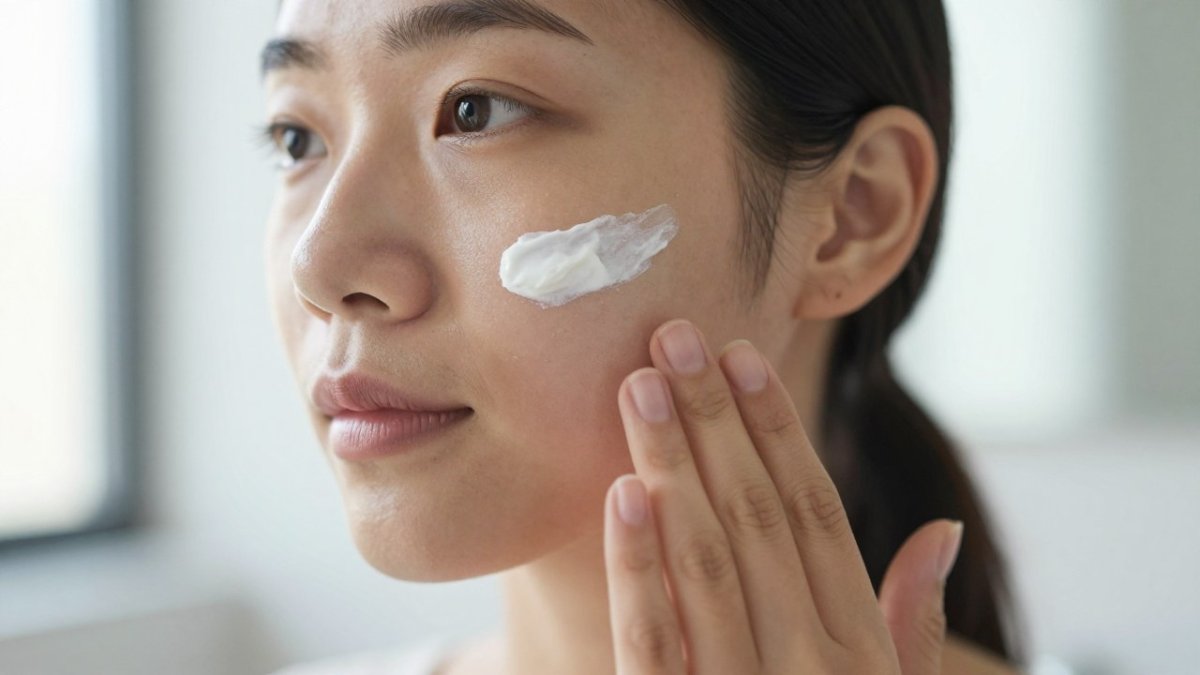
Mineral does not mean automatically gentle. Some mineral products are heavily scented or contain other irritating ingredients, and a Wirecutter review of one sensitive-skin mineral option noted it was heavily scented despite being labeled fragrance-free.
Mineral sunscreens also tend to leave a white cast on deeper skin tones, and some feel thicker on the face. If that matters to you, look for tinted or sheer-finish versions and test them in daylight before committing.
!Close-up of a woman with fair sensitive skin applying a white mineral sunscreen to her cheek in a bright bathroom
Comparing Five Natural Face Sunscreens
Most roundups tell you which bottle to buy. Fewer tell you how they decided. Below is the method we used, followed by the comparison itself, so you can judge whether our criteria match yours.
How we assessed these products. We screened each formula on five points: (1) active filter, mineral (zinc oxide or titanium dioxide) versus chemical; (2) SPF and whether the label states broad-spectrum UVA/UVB protection; (3) fragrance and known irritant ingredients such as essential oils and drying alcohols; (4) finish and white-cast behavior on light and deeper skin tones; (5) water resistance and reapplication guidance. Where a detail was not established in the supplied research, we say so rather than guess. This is an editorial comparison, not a laboratory test, and it is not a substitute for patch testing on your own skin.
| Product | SPF | Filter Type | Fragrance Status | Water Resistance | Best For |
|---|---|---|---|---|---|
| Thrive Natural Care Mineral Face Sunscreen for Sensitive Skin | 30 | Mineral | Scented per Wirecutter review | Not water-resistant per Wirecutter | Mineral SPF 30 explicitly marketed for sensitive skin |
| EltaMD UV Clear Face Sunscreen | 46 | Mineral-based roundup pick | Not confirmed in research | Not confirmed in research | Higher-SPF daily face protection |
| Shiseido Urban Environment Mineral Clear | 50 | Mineral | Not confirmed in research | Not confirmed in research | Highest SPF in this group |
| Cocokind Daily | 32 | Daily sunscreen | Not confirmed in research | Not confirmed in research | Budget-minded daily use |
| Fifth option | , | , | , | , | Slot reserved; confirm a fifth product before publishing |
Here is what each confirmed option offers.
Thrive Natural Care Mineral Face Sunscreen for Sensitive Skin SPF 30
A mineral face sunscreen made for sensitive skin with SPF 30. Wirecutter included it as a face-sunscreen option.
Best for: People who want a mineral SPF 30 explicitly marketed for sensitive skin.
Skip if: You want water resistance or a completely unscented feel, since Wirecutter reported it was not water-resistant and noted scent and shine.
EltaMD UV Clear Face Sunscreen SPF 46
Byrdie named this its best overall mineral sunscreen pick in a roundup.
Best for: Shoppers who want an SPF 46 face sunscreen with a strong editorial recommendation.
Skip if: You need a confirmed natural formula, since the supplied research does not establish one.
Shiseido Urban Environment Mineral Clear Sunscreen SPF 50
Allure selected this mineral SPF 50 sunscreen as its best pick for sensitive skin.
Best for: Sensitive-skin shoppers who want SPF 50 from a mineral formula.
Skip if: You need verified water resistance or fragrance details, which the research does not confirm.
Cocokind Daily SPF 32
Cocokind Daily appeared in a roundup of affordable natural sunscreens.
Best for: Daily use on a budget.
Skip if: You need proof it is formulated for sensitive skin, since the research does not verify that claim.
Watch out: A ‘fragrance-free’ label is not the same as unscented, some products labeled fragrance-free still contain masking scents or essential oils, which is exactly the pattern Wirecutter flagged on one sensitive-skin mineral option. Read the full ingredient list, not just the front of the bottle.
Organic Sunscreen for Face: Why Certification Alone Is Not Enough
An organic certification tells you something about how ingredients were sourced. It does not tell you whether a sunscreen will protect you from UVA and UVB rays or whether it will be gentle on reactive skin. Those are separate questions.
Check three things on any organic face sunscreen: the active filter, the SPF rating and broad-spectrum label, and the full ingredient list. If the active filter is zinc oxide or titanium dioxide, you know the protection mechanism. If the label does not state broad-spectrum protection, treat the claim as incomplete. You can follow a step-by-step guide to verifying skincare product quality to check each claim yourself. For a step-by-step method, see 7 Steps to Choose Skincare for Sensitive Skin or How to Verify Skincare Product Quality: A Step-by-Step Guide.
Patch Testing and Application Amounts for Sensitive Skin
Most sensitive-skin irritation from sunscreen is avoidable, and it usually comes from two places: an ingredient your skin reacts to, or too little product applied too infrequently. This section covers both, with a screening method competitors rarely spell out.
Screen the ingredient list first. Before you patch test, scan for the usual suspects. A step-by-step guide to choosing skincare for sensitive skin walks through this screening in more depth. Fragrance and essential oils (lavender, citrus, peppermint) are common triggers on reactive skin.
Patch test in a controlled way. Apply a small amount to the inner forearm or behind the ear once a day for three to five days and watch for redness, itching, or burning. Only move to your face if the test area stays calm. Test one new product at a time so you can attribute a reaction correctly.
Watch out: A product can pass a forearm patch test and still irritate the face, because facial skin is thinner and more exposed. If you are highly reactive, test a small area of the jawline before full-face application.
Apply enough, this is where most people fall short. A common guideline is about a quarter teaspoon for the face and neck, or roughly the length of two fingers. Most people apply far less, which cuts real protection well below the SPF on the label. Reapply every two hours, and sooner after sweating or swimming (Spend Time Outside and Stay Sun-safe).
Build a routine that survives real life. Apply sunscreen as the last step of your morning skincare, after moisturizer. Shoppers with sensitive skin can also explore sensitive skin care for gentle companion products.
Why Homemade Natural Sunscreen Is a Risky Substitute
Homemade sunscreens are popular in natural-living circles, but the research is consistently discouraging. A JMIR Preprints review of homemade formulations found they offer little to no sun protection, which could increase UV damage risk. Skipping a tested commercial product for a kitchen recipe trades a small inconvenience for a serious gap in protection.
If you want natural ingredients, choose a commercially tested mineral sunscreen instead. It gives you a verified SPF and broad-spectrum claim that a home recipe cannot.
Choosing Your Next Sunscreen and Where to Shop Beauty Fresh Essentials
Start with a mineral filter, a fragrance-free label, and a clear broad-spectrum claim. Then choose the SPF and finish that fit your daily routine. Patch test before committing, and replace the bottle once you have used it through.
If you are deciding where to buy, you can browse our range at Beauty Fresh Essentials and read more about choosing daily wellness tools as a beginner. We curate our collection so you can find gentle, practical products in one place, and we want you to feel confident in what you apply to your face every day.
Frequently Asked Questions
What is the best sunscreen for your face if you have sensitive skin?
Mineral sunscreens that use zinc oxide or titanium dioxide are usually the safest starting point for sensitive skin, because these filters sit on the skin surface rather than being absorbed. Look for fragrance-free formulas, a short ingredient list and broad-spectrum labelling with at least SPF 30. Patch test any new product on your jaw or inner arm for several days before applying it to your whole face.
Is mineral sunscreen a good choice for sensitive skin?
Mineral sunscreen is widely recommended for sensitive skin because zinc oxide and titanium dioxide are less commonly linked to irritation than many chemical UV filters. Mineral formulas can leave a white cast, so choose a tinted or micronised version if that matters to you. Fragrance is a more common irritant than the filters themselves, so check for fragrance-free labelling.
Is there a natural alternative to sunscreen?
No natural alternative reliably replaces sunscreen. Homemade sunscreens generally offer little reliable sun protection and can leave skin exposed to UV damage. Shade, protective clothing, hats and sunglasses are useful supplements, but they do not provide the broad-spectrum coverage that a tested SPF product does. If you want a natural option, buy a commercially tested mineral sunscreen rather than making your own.
Can natural sunscreen protect against both UVA and UVB rays?
Many natural sunscreens do protect against both UVA and UVB rays, but the claim is not guaranteed by the word natural. Look for the words broad spectrum on the label, which indicates testing for both UVA and UVB protection. Zinc oxide offers strong UVA coverage, so a mineral formula with zinc oxide is a good sign. Achieving high, broad-spectrum protection in natural or organic formulas remains a technical challenge.



0 Comments