
Last Updated: November 8, 2026
Quick Summary
Frequent air travel can leave skin tight, dull and dehydrated, because cabin air holds very little moisture. Skin prepared before flying, with a simple routine of hydrating serum, moisturizer and lip balm, handles the dry air much better.
- Start preparing your skin a day before you fly, not at the gate.
- Remove heavy makeup before boarding, since it can trap dryness against the skin.
- Seal hydrating serums with a moisturizer, or they can evaporate in dry cabin air.
- Skip strong acids, retinol and vitamin C right before or during a flight.
- Wait a day or two after landing before resuming exfoliating or strong actives.
Table of Contents
- Why Frequent Air Travel Dries Out Your Skin
- Preparing Your Skin Before You Fly
- Building an In-Flight Skincare Routine
- What to Pack in a Flight Skincare Kit
- Can I Bring Skincare on a Plane? Carry-On Rules and Tips
- A Post-Flight Skincare Routine for Recovery
- Building Your Travel Routine Across Repeated Trips
- Start Your Next Trip With a Ready-Made Travel Kit
- Frequently Asked Questions
Why Frequent Air Travel Dries Out Your Skin
Frequent air travel can leave your skin feeling tight, dull and dehydrated. The cabin air is much drier than what most people feel at home, and that dryness can show up on your face within hours. If you fly often, the effect adds up.
Cabin air holds very little moisture, and the skin loses water through evaporation faster in that environment. Skin can become flaky, red or dull after long trips. The skin barrier, which keeps moisture in, can weaken when it runs dry for hours at a time.
Here is what tends to happen to skin on a long-haul flight:
- Moisture escapes faster than usual through the skin
- Skin can feel tight, rough or itchy
- Redness and irritation may flare up, especially for sensitive skin
- Makeup can look patchy and settle into fine lines
Watch out: Heavy makeup worn for a long flight often traps dryness against the skin. Remove it before you board, not after you land.
Preparing Your Skin Before You Fly
Start preparing your skin a day before you fly, not at the gate. For guidance on picking gentle products that won’t irritate, see choose skincare for sensitive skin. Skin that goes into a flight already hydrated handles the dry air much better. Think of it as building a moisture reserve.
Keep the routine simple and gentle. Wash your face with a mild cleanser that doesn’t strip oil. Follow with a hydrating serum and a moisturizer that suits your skin type. Apply sunscreen during the day, since sun exposure through airplane windows still counts.
Drink water in the days before your trip too. Hydration from inside supports your skin, though it does not replace topical moisture. Many people skip water on travel days, so set a reminder to sip regularly.
Building an In-Flight Skincare Routine
A short routine on the plane can keep your skin comfortable for the whole flight, but the order you apply products matters as much as the products themselves. The goal is to support the skin barrier in low-humidity cabin air without overloading it.
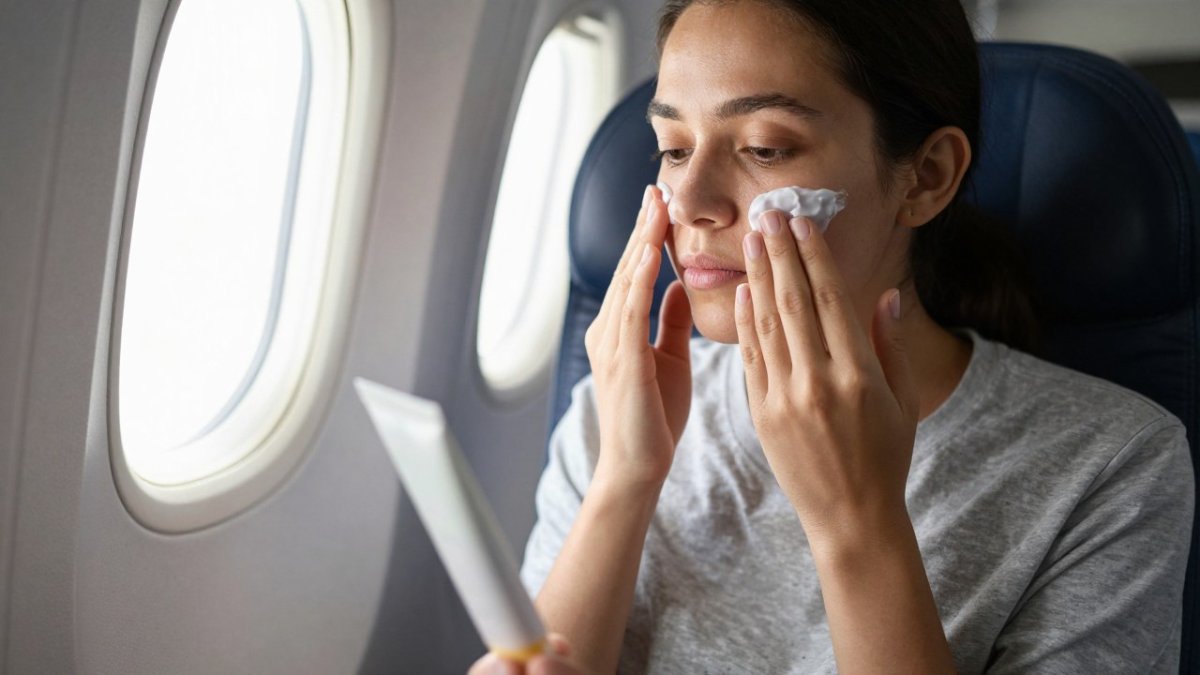
Start by cleansing or refreshing. If you wore makeup to the airport, remove it with micellar water or a gentle cleanser on a cotton pad before you board or shortly after takeoff. A facial mist alone does not clean skin, but it can re-wet the surface so the next layer absorbs better. Apply the mist, then move immediately to the hydrating step while skin is still damp.
Next, apply a water-based hydrating serum or essence. Look for ingredients like glycerin, hyaluronic acid, or panthenol. These humectants pull water toward the skin surface, but in very dry cabin air they need a seal on top or they can evaporate and leave skin feeling tighter. That is why the moisturizer step is not optional.
Seal with a moisturizer that contains occlusive or barrier-supporting ingredients. For most skin types, a cream with ceramides, squalane, or shea butter works well. If you have oily or acne-prone skin, choose a lighter gel-cream with glycerin and niacinamide rather than a heavy balm, which can trap oil and trigger breakouts in a cramped, warm cabin.
Finish with a lip balm, since lips have no oil glands and dry out faster than facial skin. A balm with petrolatum or shea butter and SPF 15 or higher is a practical choice for daytime flights. If you are flying overnight and the cabin lights are dim, you can skip SPF until morning, but reapply before landing if you will be outside.
Watch out: Do not layer a strong exfoliating acid, retinol, or high-concentration vitamin C serum right before or during a flight. These actives can increase sensitivity, and the dry cabin air makes irritation more likely. Save them for your normal routine at home, or apply them at least 24 hours before departure so your skin has time to recover.
Keep your hands clean before touching your face. Cabin areas are shared spaces, and tray tables, armrests, and seatback pockets are not cleaned between every flight. Use hand sanitizer or wash your hands before applying products, and avoid dipping fingers directly into jars. Stick-style balms, tubes, and pump bottles are more hygienic than pots in a cramped cabin.
On longer flights, you can repeat parts of the routine, such as misting and reapplying moisturizer, then add lip balm as needed. You do not need to cleanse again mid-flight unless you feel gritty or sweaty; over-cleansing in dry air can strip the barrier further.
!A traveler in an airplane seat applying moisturizer to her face from a small travel-size tube, window light softly visible beside her
What to Pack in a Flight Skincare Kit
A good flight skincare kit should be small, leak-proof and easy to use with one hand. Pack only what you actually use at home, so you avoid carrying products you won’t touch.
Include these basics in your kit:
- A gentle cleanser or micellar water for makeup removal
- A hydrating serum or facial mist
- A lightweight moisturizer, ideally one that suits your skin type
- Sunscreen with SPF for daytime flights
- A lip balm with SPF
- Travel-size containers that fit inside a clear bag
Our pick for an easy start is a ready-made travel set, which saves time on packing. For a broader look at compact options, see Best Travel Size Skincare Essentials 2026. If you want a curated selection of ready-made travel beauty kits to compare, Best Travel Beauty Kits for Women: 2026 Guide covers several options.
The kit should stay small, and these are the core items the article recommends bringing.
| Item | Purpose | Note |
|---|---|---|
| Gentle cleanser or micellar water | Removes makeup | Remove before boarding |
| Hydrating serum or facial mist | Adds moisture | Use while skin is damp |
| Lightweight moisturizer | Hydrates skin | Suit your skin type |
| Sunscreen with SPF | Protects on daytime flights | Sun through windows still counts |
| Lip balm with SPF | Protects lips | Lips dry out faster |
| Travel-size containers | Fit clear carry-on bag | Keep leak-proof |
Can I Bring Skincare on a Plane? Carry-On Rules and Tips
Yes, you can bring skincare on a plane. Liquid rules vary by country and airline, so check the official guidance before you fly (Luggage restrictions).
Put your liquids in a clear, resealable bag that is easy to remove at security. Keep your skincare in your carry-on rather than checked luggage, since pressure changes can cause bottles to leak. Pack anything you can’t do without in your carry-on, even if you check a bag.
A Post-Flight Skincare Routine for Recovery
When you land, your skin needs a reset, but for frequent flyers the recovery routine matters as much as the in-flight one. Repeated flights can leave the skin barrier chronically stressed, so the goal after landing is to calm inflammation, restore moisture, and avoid introducing new irritants before the skin has settled.
Start with a gentle cleanse to remove sweat, sunscreen, and any buildup from the flight. Use lukewarm water and a mild, fragrance-free cleanser. Avoid harsh scrubs, cleansing brushes, or hot water, since the skin is already stressed and barrier function may be reduced. If your skin feels tight or stings, that is a sign to skip actives for at least 24 hours.
Next, apply a hydrating serum and a rich moisturizer to restore the barrier. Look for ceramides, glycerin, panthenol, and squalane. If your skin feels irritated, choose a soothing product without fragrance or essential oils. A common pattern among frequent flyers is to apply a barrier cream immediately after landing, then again before bed, to give the skin two chances to recover before the next day.
For the first night after a long-haul flight, keep the routine simple: cleanse, hydrate, moisturize, and skip retinol, exfoliating acids, and high-strength vitamin C. These actives can be reintroduced after one or two nights of gentle care, once redness and tightness have subsided. If you have eczema or rosacea, you may need three to four days of barrier-focused care before returning to your normal actives.
Drink water, and give your skin a full night’s rest with a simple routine. Hydration from inside supports recovery, though it does not replace topical moisture. A humidifier in the bedroom can help if you live in a dry climate, especially after a flight that already dried out your skin.
For frequent flyers, track how your skin responds across trips. A practical approach is to note the route, flight duration, and any flare-ups in a simple phone note. Over time, you will see whether long-haul flights, overnight flights, or particular seasons affect your skin more. That pattern lets you adjust your kit and routine before the next trip rather than reacting after every landing.
Watch out: Do not try to catch up on exfoliation or use a strong mask immediately after landing. The skin is often more permeable and sensitive after hours in dry cabin air, and aggressive treatments can turn mild tightness into visible irritation. Give the barrier a day or two before resuming actives.
If you fly again within a few days, treat the time between flights as part of the routine. Keep your kit stocked, restock empty containers as soon as you return home, and prioritize barrier-supporting products over novelty treatments. A repeatable recovery pattern is more useful than any single product, especially when travel is frequent.
Building Your Travel Routine Across Repeated Trips
If you fly often, a consistent routine matters more than any single product. Set up a repeatable sequence you can use on every trip, so you never have to think about it.
Keep your kit stocked and ready between trips. Restock empty containers as soon as you return home. Track how your skin reacts on different routes, since long-haul flights often affect skin more than short ones.
For a step-by-step approach to a regimen you can keep up, see How to Build a Skincare Regimen That Actually Works. If you need a minimal in-flight routine, How to Build a Simple Skincare Routine: Step-by-Step walks through the basics.
Start Your Next Trip With a Ready-Made Travel Kit
Preparing for frequent air travel doesn’t need to be complicated. A short routine before, during and after each flight can help keep your skin comfortable. Beauty Fresh Essentials offers a curated selection of beauty and self-care essentials to help you pack with less guesswork.
Frequently Asked Questions
How should I care for my skin before, during, and after a flight?
Before boarding, cleanse gently and apply a hydrating serum and a lipid-based moisturizer so your skin has a barrier ready for low cabin humidity. During the flight, drink water regularly, reapply moisturizer and lip balm every few hours, and use a mist sparingly. After landing, cleanse again, rehydrate with a calming moisturizer, and reapply sunscreen if you are heading outdoors. Adjust these steps to your skin type, and see a dermatologist if irritation persists.
Can I bring skincare products on a plane?
Yes, you can bring skincare in your carry-on, usually in travel-size containers. Liquid rules vary, so check current rules with your airline and the security authority at your departure airport before you fly. Keep products easy to reach so security checks go smoothly, and pack creams and gels in a clear, resealable bag. Solid or powder formats avoid most liquid restrictions.
What should I put in a flight skincare kit?
A practical flight skincare kit includes a gentle cleanser or micellar water, a hydrating serum, a lipid-based moisturizer, a lip balm, and a broad-spectrum SPF for daytime flights or arrivals. Add a small sheet mask or hydrating mist if you like them, and keep everything in travel-size containers. Pack only the products you already use and trust, since a new product can irritate skin at altitude and in dry air.
Should I wear a face mask on a plane?
A sheet mask or hydrating face mask can add short-term moisture during a long flight. Apply it to clean skin, follow the product’s instructions, and remove any excess serum before settling in. Masks do not replace drinking water or reapplying moisturizer, and they are not a substitute for a barrier-supporting routine.




0 Comments